


General liability vs. auto liability insurance
General liability insurance and auto liability insurance provide coverage for injuries or damage caused by an accident. Learn how they compare and when you might need to protect your business.
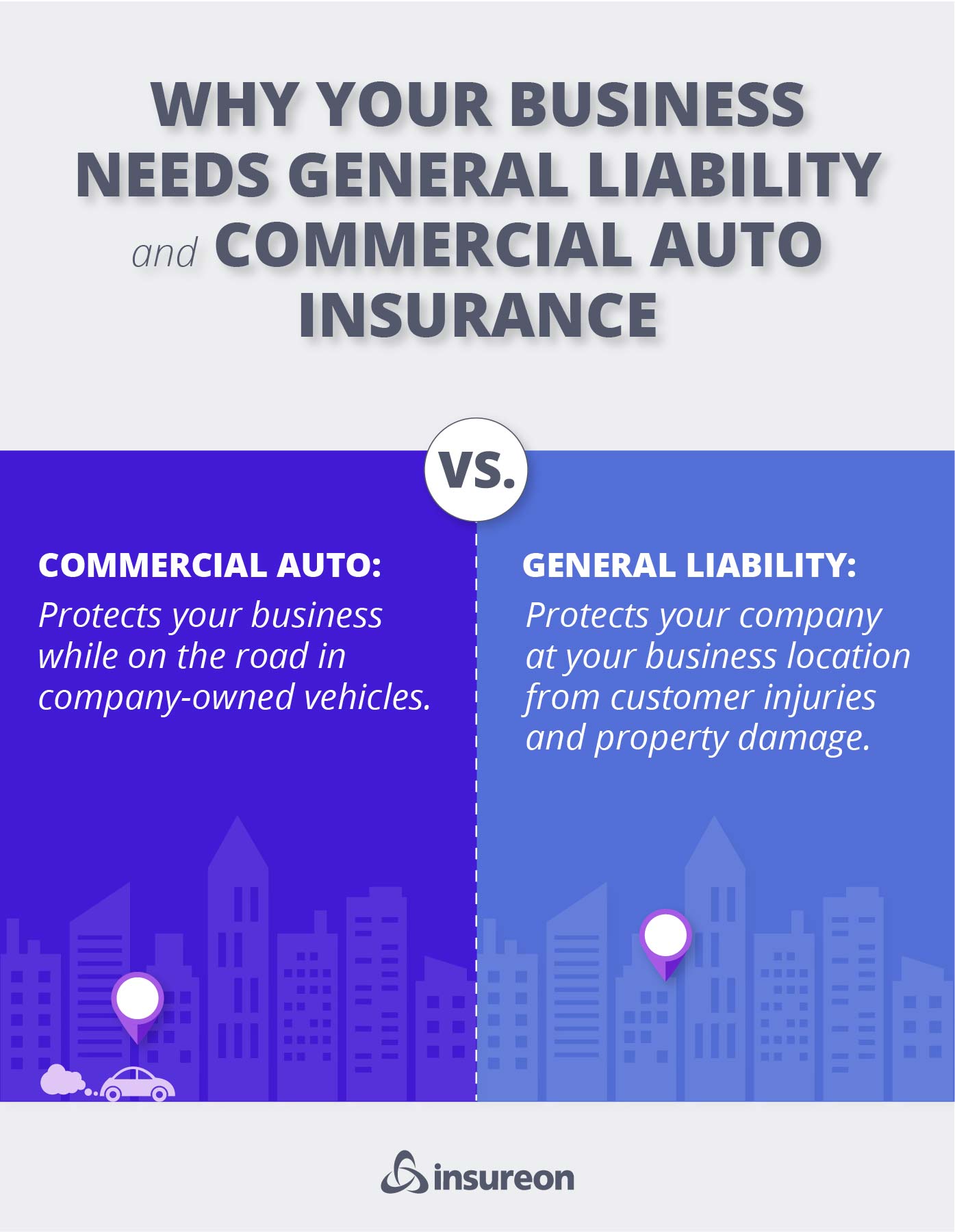
What is the difference between general liability vs. commercial auto insurance?
General liability and auto liability insurance coverage are both important for small businesses, but they cover different types of risk.
- General liability covers third-party property damage or bodily injury, like if a client sues you after slipping and falling at your business premises
- Commercial auto covers company-owned vehicles and is often mandated by the state
Here's a closer look at each type of insurance:
What is general liability insurance?
General liability insurance covers common third-party risks and lawsuits for small businesses, including:
- Bodily injuries that occur on your business property
- Property damage resulting from employee actions or on company property
- Advertising injuries and personal injuries such as slander, libel, or copyright infringement
Many general liability insurance policies also include product liability insurance, which protects your business from lawsuits if a customer claims your product caused physical damage or injuries.
What is commercial auto insurance?
Commercial auto insurance covers your business-owned vehicles while they're being used for work purposes. It's required by most states (except New Hampshire), with liability limits and minimum coverage established at the state level.
If there's an accident in a company vehicle and you or your employees are at fault, commercial auto covers:
- Bodily injury, including medical expenses if a third party is hurt
- Property damage, such as the cost to repair or replace damaged items
- Legal costs, if your business is sued by a third party after an accident
- Uninsured motorist coverage, meaning if you get into an accident and the other driver isn't insured, your business won't have to pay any medical expenses or vehicle repairs
You can add coverage to your policy, such as collision coverage and physical damage coverage, for incidents involving vandalism, theft, and fire.
Keep in mind, leased, rented, or personal vehicles used for business are not covered under a standard auto insurance policy. For this, you'd need separate coverage called hired and non-owned auto insurance (HNOA).
Do you need both commercial general liability and auto liability insurance?
Whether you need both policies will depend on your business needs and risks.
For example, if your business doesn't own commercial vehicles, you won't need an auto policy because the coverage would never realistically benefit your business. Additionally, if you operate a business with very little public interaction, you may not necessarily need a general liability policy.
However, most business owners purchase both policies to ensure they're covered from the myriad risks associated with running a small business. General liability insurance, in particular, covers many common lawsuits and tends to be the first policy many small businesses purchase.
[video: an animated header displays the Insureon logo. Underneath it, a subheading displays the text: "What's the difference between general liability and auto liability?"]
MALE VOICEOVER: One of the most common questions small business owners ask is: Do I need general liability insurance or commercial auto insurance? Or do I need both? The terms sound similar, but they cover very different risks. Let’s take a closer look at both policies.
[video: an illustrated header displays the text: "Do I need general liability, commercial auto, or both? "]
Think of general liability insurance as protection for your day-to-day business activities. It covers third-party claims like customer injuries, property damage, and advertising lawsuits.
[video: an illustrated header displays the text: "General liability covers:"]
[video: Under above header, three bullet points display the text: "Customer injuries at your shop"; "Accidental property damage"; "Legal costs if someone sues"]
It’s essentially your first line of defense against common risks every business faces.
One the other hand, commercial auto insurance is all about your business vehicles. If you drive for work, whether it’s a delivery van, work truck, or company car, commercial auto covers accidents, property damage, and injuries from those vehicles.
[video: an illustrated header displays the text: "Commercial auto covers:"]
[video: Under above header, three bullet points display the text: "Auto accident injuries"; "Property damage from vehicles"; "Vehicle theft and vandalism"]
Here’s a quick way to remember the difference... General liability protects you from accidents that happen because of your business activities, and commercial auto protects you from accidents that happen because of your business vehicles.
[video: an illustrated header displays the text: "General liability = business activity accidents"; "Commercial auto = business vehicle accidents"]
Many small businesses need both. For example, a contractor might need general liability to cover jobsite risks, and commercial auto to protect their work truck.
[video: an illustrated header displays the text: "Many small businesses need both policies to protect their operations."]
At Insureon, we make it easy to compare quotes for both general liability and commercial auto insurance.
[video: an illustrated white header displays the text: "Insureon is the #1 digital agency for small business insurance."]
Get protected today, so you can focus on running your business with confidence. Click the link to get started.
[video: an animated header displays the Insureon logo]

What is not covered by general liability or commercial auto insurance?
Your general liability coverage and corporate car insurance policies will cover many of the common risks associated with running a business, but they won't cover everything.
All insurance policies have exclusions for types of incidents they won't cover. For general liability insurance, most insurance companies will not cover intentional damage, criminal acts, preventable risks, and subcontractors.
Auto insurance also has its own limits to what it covers, and many auto service, trucking, or transportation companies may need supplemental coverage, like bobtail insurance to cover their trucks when they're driving without a trailer or for non-business purposes.
Another example includes auto body shops and other businesses with garages which will likely need additional coverage called garage liability insurance or garage keepers insurance, depending on their specific needs.
Lastly, commercial auto and general liability may not fully cover an incident or accident, depending on your coverage limits. While most policies are sufficient to cover most accidents or lawsuits, an exceptionally expensive liability claim may exceed your policy and cost you out-of-pocket. An umbrella policy can help cover the difference should you need additional coverage.
You can talk with a licensed insurance agent to ensure that you and your business are fully covered for your specific industry and risks.

Protect your business with the right insurance policies with Insureon
Complete one easy online application and we'll help you get connected with free insurance quotes from the U.S.'s leading insurance companies.
You can also speak to our licensed insurance agents with any questions you might have about your auto or general liability policies, or other important types of coverage your business may need, such as professional liability or workers' compensation.
Once you find the right policies for your needs, you can begin coverage and receive your certificate of insurance, often within 24 hours.
Verified general liability coverage reviews
Find small business insurance quotes



Want free expert advice right in your inbox?
By entering your email address and subscribing, you agree to our Terms of Use and Privacy Policy