





































Find errors and omissions insurance quotes
Save money by comparing insurance quotes from multiple carriers.

The cost of errors and omissions insurance (E&O), also called professional liability coverage, varies based on a number of factors about your business. Your premium is directly impacted by your industry, business size, your location, and more.
Small businesses pay an average of $88 per month, or $1,051 annually, for errors and omissions insurance. Annual premiums range from around $400 to over $7,000 per year.
Our figures are calculated using the median cost of policies sold by leading insurance companies to Insureon's small business customers. The median offers a better estimate of what your business is likely to pay because it excludes outlier high and low premiums.
Your premium depends on your exposure to professional negligence claims, which are covered by this policy. Other factors include your business location, revenue, and number of employees.
Depending on your industry, you may see this type of coverage called E&O insurance, professional liability insurance, or malpractice insurance.
Insureon's small business customers pay an average of $88 monthly for errors and omissions insurance.
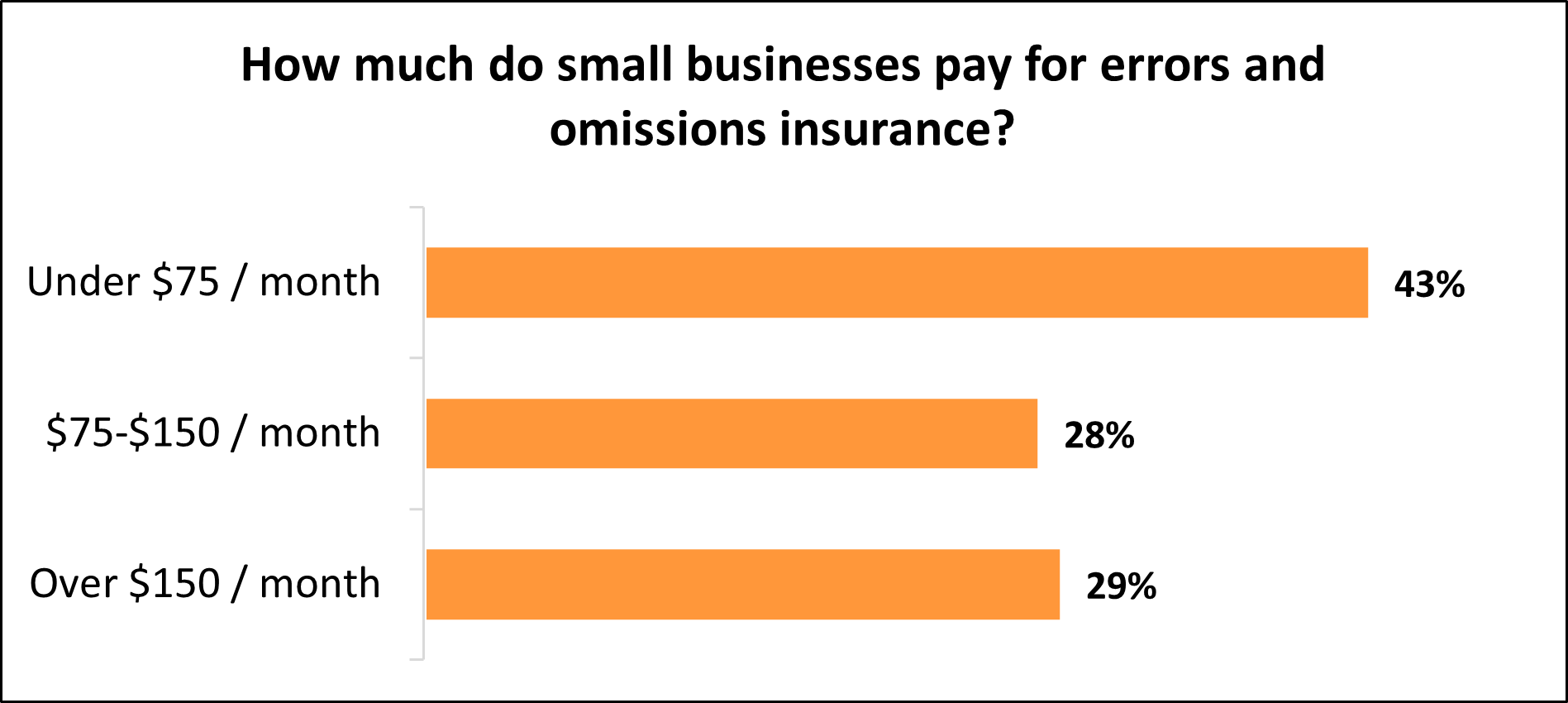
Annual premiums range from around $400 to over $7,000 per year. Among our customers, 43% pay less than $75 per month for their policies, and another 28% pay between $75 and $150 monthly.
The cost varies for small businesses depending on their unique risks and the type and amount of coverage they choose.

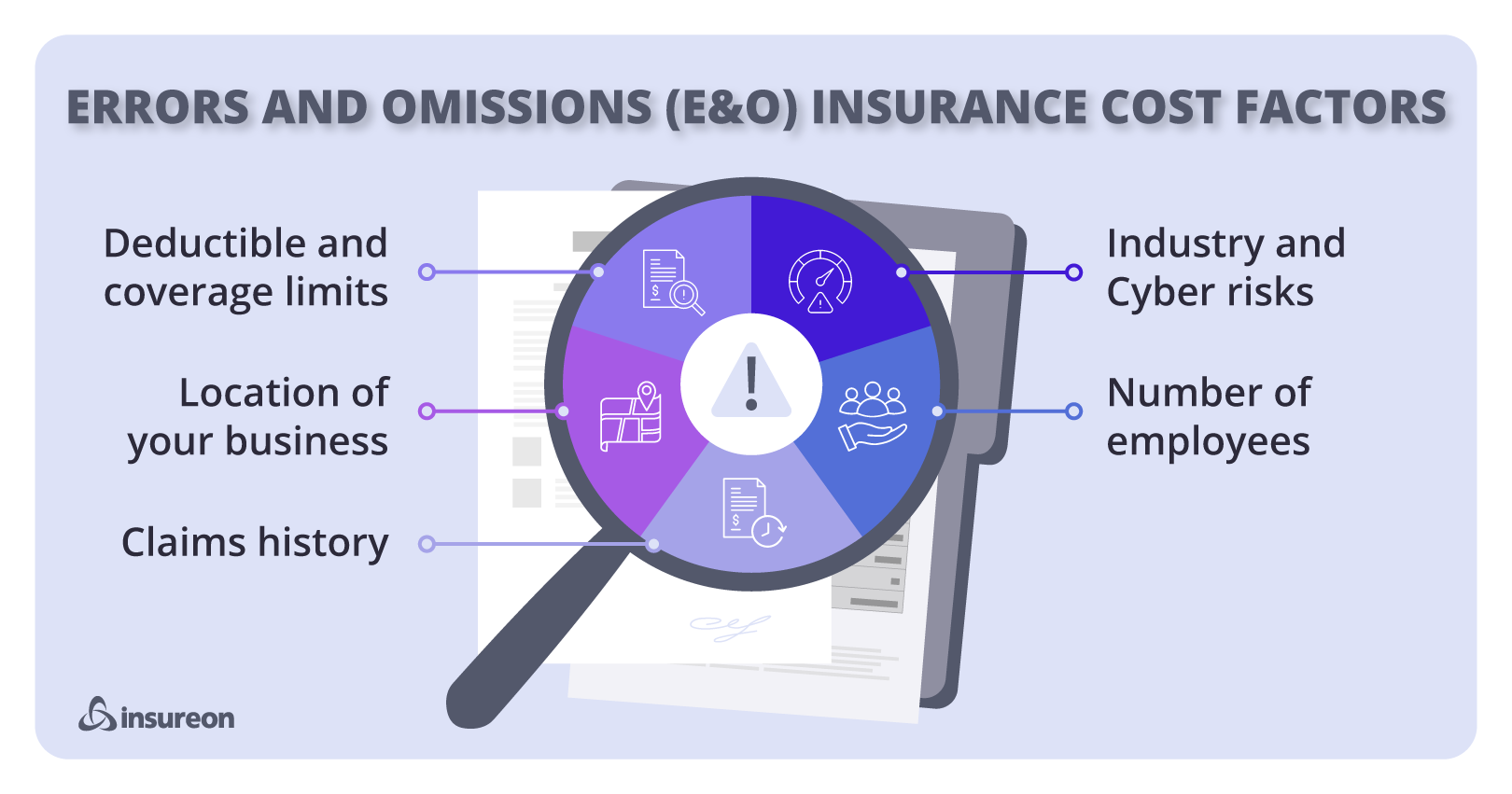
When insurers assess your risks during underwriting, they will consider various factors that affect your E&O insurance costs, including:
If you want an errors and omissions insurance policy that covers more expensive lawsuits, you’ll need higher limits—which means you’ll pay a higher price.
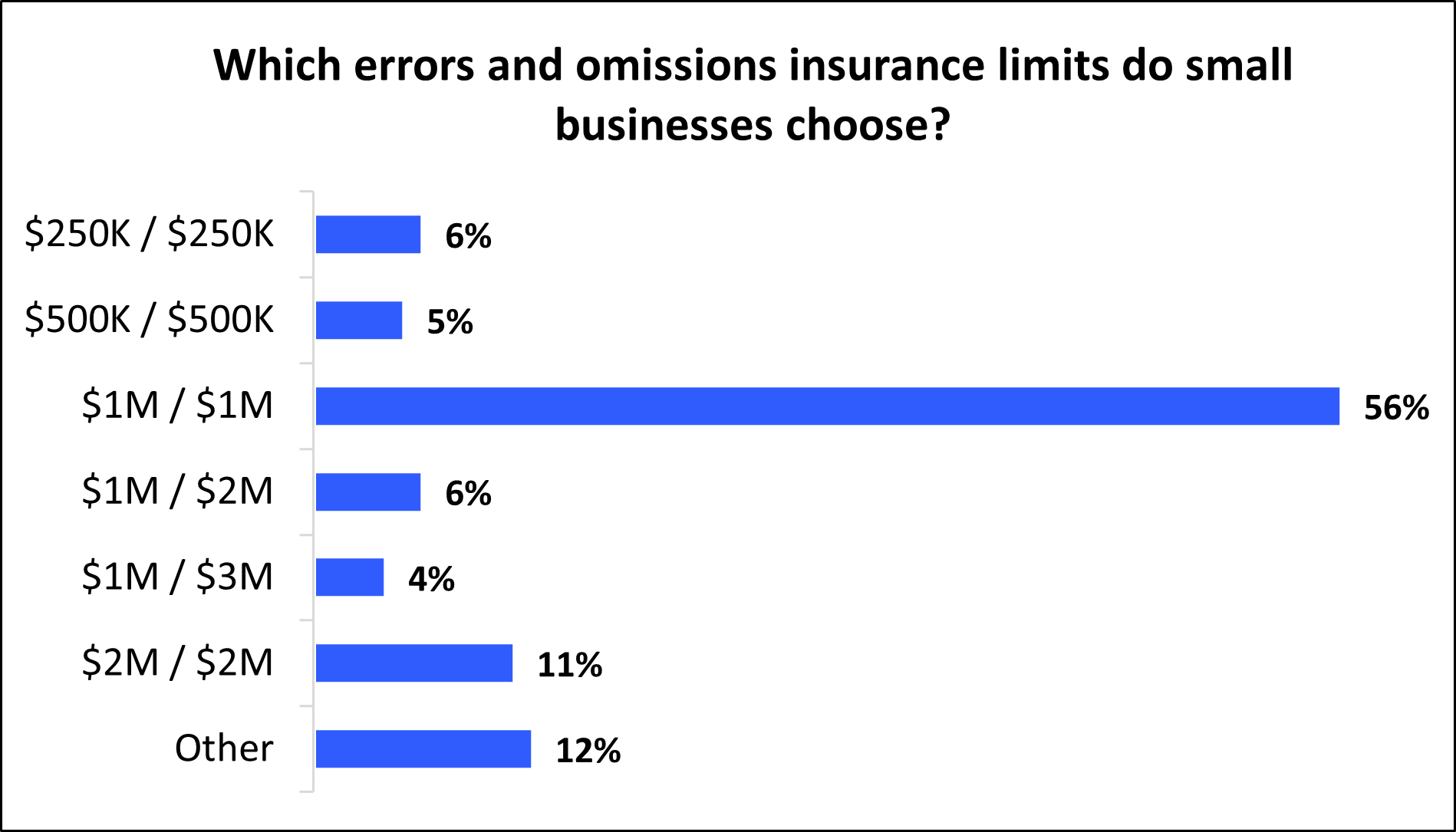
The policy limits on E&O coverage vary significantly, from $250,000 to $2 million and more. The majority of Insureon customers (56%) choose an E&O insurance policy with $1 million / $1 million limits.
This includes:
Eleven percent of our customers choose an E&O policy with $2 million / $2 million coverage limits, the next most popular choice.
The average deductible for E&O insurance is $2,500 for Insureon's customers. Policies with higher deductibles cost less, but make sure it's an amount you can easily afford. If you can’t afford to pay the deductible in a crisis, your insurance won’t activate to cover claims.
If your business needs errors and omissions insurance overage beyond the standard policy limits, you can purchase excess liability insurance to increase these limits. This type of coverage kicks in once you’ve exhausted the limits of your primary E&O policy, and provides an extra layer of protection for higher-risk businesses, such as those that handle high-dollar contracts or work in highly litigious industries.
However, the higher your total coverage limit, the more your insurer is potentially on the hook for, and that additional risk is reflected in your rate.
The right amount of E&O coverage depends on your business needs. Consult a licensed insurance agent if you're unsure which limits are right for your business.
The cost of errors and omissions insurance also depends on the coverage options you choose. You can often bundle E&O with other types of insurance to save money, or add endorsements for specific risks.
For example, IT professionals can buy E&O insurance and cyber insurance together in a bundle called technology errors and omissions insurance (tech E&O). This policy covers lawsuits related to data breaches, which are a concern for IT consultants, cybersecurity companies, and others who could be blamed for security failures.
Sometimes you can add E&O coverage to your general liability policy or business owner's policy (BOP). You can include other endorsements for unique exposures, such as intellectual property (IP) insurance to cover potential IP disputes.
You might need a certain type or amount of coverage to sign a contract with a larger client or work on a specific project. This can also impact your policy costs.
Where your business operates can have a significant impact on the cost of E&O insurance. Insurers consider location when assessing risk and setting premiums, as certain areas may have state-specific insurance requirements or higher costs for resolving a lawsuit.
For example, businesses in states like California or New York may see higher premiums compared to those in less litigious regions, simply due to the legal environment and historical claim trends.
If your business works across state lines or serves clients in multiple jurisdictions, that can also influence the structure and price of your policy.
This table shows how the cost of E&O insurance varies across our top states:
| State | Average E&O insurance cost |
|---|---|
$94 per month | |
$84 per month | |
$83 per month | |
$83 per month | |
$78 per month | |
$93 per month | |
$97 per month | |
$79 per month | |
$91 per month | |
$99 per month |

Your business’s history of claims is one of the key factors insurers use to evaluate risk.
If you've filed a claim in the past, insurers may see your business as higher risk, which can lead to increased E&O insurance premiums. A clean claims history, on the other hand, can help keep your costs low.
Strict documentation practices, ongoing employee training, and proactive risk management can go a long way toward preventing claims. Setting up procedures to avoid mistakes and manage client expectations shows insurers you're committed to minimizing risk—something they may reward with favorable rates.
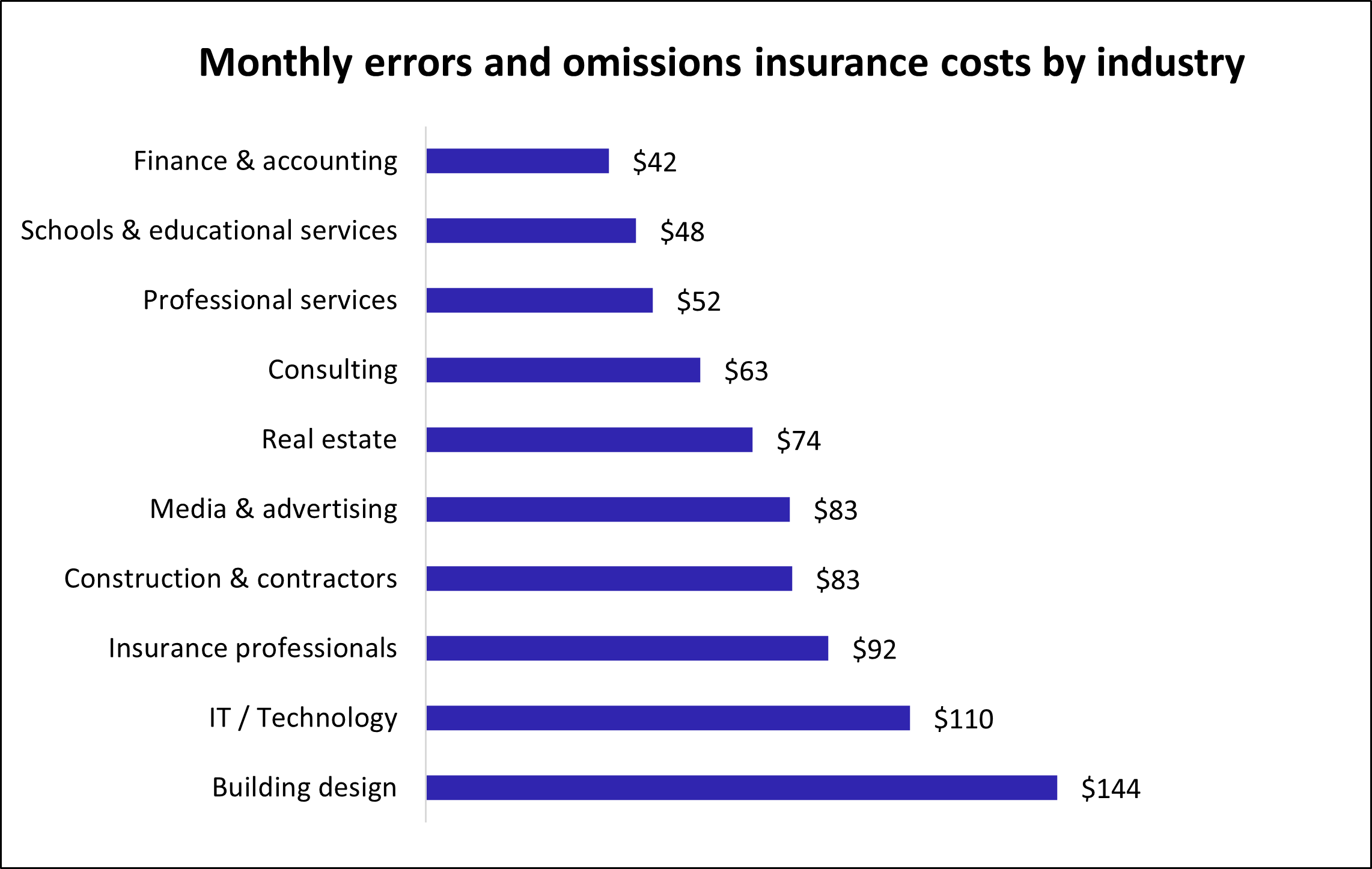
Your industry plays a major role in how much you’ll pay for errors and omissions insurance. Our analysis shows high-risk professions tend to pay significantly more than lower-risk ones—often by hundreds of dollars per year.
For example:
Some professionals—such as real estate agents, healthcare professionals, lawyers, and financial advisors—might need E&O insurance to get licensed or to work for a specific client. Even if it’s not required, having coverage can help protect your business from expensive legal fees tied to mistakes, missed deadlines, or perceived negligence.
The chart below shows how E&O insurance costs vary widely based on your profession:
The size of your business—and the number of employees you have—can influence the cost of your errors and omissions insurance. A larger workforce brings greater risk of a potential error or miscommunication, which increases your overall risk in the eyes of insurers.
As your team grows, it's important to ensure your E&O policy is updated to reflect changes in staffing and responsibilities. Having clear internal processes and employee training in place can help manage risk and keep your insurance costs more predictable.
Your business’s annual revenue is another key factor insurers consider when determining E&O insurance costs. In general, higher income means a higher premium.
That’s because high-revenue businesses often have more clients, larger contracts, or higher-value projects—leading to increased risk exposure and potentially more expensive claims. Insurers price your policy accordingly to reflect the scale and scope of your operations.
Errors and omissions insurance is a must-have for small businesses that provide professional services or consulting.
An expert can still make a mistake or give advice that causes a financial loss for a client. If the client sues, attorney’s fees, court costs, and other legal expenses can escalate to the point where they could sink your business.
Even if you've done nothing wrong, you're not immune to lawsuits. For example, your business could lose a key individual who you need to complete a project on time, or a client could sue over a budget overrun that was out of your hands.
When someone sues your business—even if it's a frivolous lawsuit—you'll have to pay legal defense costs, including the cost of hiring an attorney. If you lose the suit, you could end up paying a fortune in a court-ordered judgment or a settlement.
E&O insurance covers all of these costs, which provides peace of mind and could save your business from bankruptcy. Because the premium is based upon your level of risk and your industry, many small businesses pay only a small monthly premium for this coverage.
There are several steps you can take to reduce your E&O premium and avoid overspending:
Shop around. Insurance companies offer a range of errors and omissions premiums and coverages. Compare quotes from top-rated carriers with Insureon's easy online application.
Pay your entire premium upfront. Policyholders can choose to pay insurance premiums once a month or once a year. Though it's tempting to opt for smaller monthly payments, it'll cost more in the long run. Insurers usually give a discount when you pay the full annual premium.
Bundle policies. It's sometimes possible to bundle errors and omissions insurance with other policies, such as general liability insurance. For example, tech companies can buy E&O insurance and third-party cyber insurance together in a bundle called tech E&O. This usually costs less than purchasing the policies separately.
Maintain continuous coverage. While it’s possible to purchase coverage when you start a project and drop coverage when you complete the project, this cost-cutting strategy can backfire for errors and omissions and other claims-made policies. To file an E&O claim, your insurance must be active both:
Reduce your risks. Your errors and omissions claims history is a big factor when calculating your premium, which is why it's important to avoid lawsuits in the first place. Many errors and omissions lawsuits stem from client disputes. To reduce the risk of hefty legal fees, you can:
Insureon is the #1 digital agency for small business insurance. We help you save time and money by comparing quotes, buying policies online, and downloading proof of coverage whenever you need it.
Fill out our easy online application today to get free quotes for E&O insurance, workers' compensation insurance, and other types of business insurance from top-rated providers. Our licensed insurance agents can answer any questions and help you find the best E&O coverage for your business.
Once you choose a policy, you can begin coverage in less than 24 hours and get a certificate of insurance for your small business.
For more information, review our FAQs about errors and omissions insurance.
The average costs on this page were derived from our data on 100,000 small business owners who purchased policies through Insureon. Most of our customers have fewer than five employees, annual revenue ranging from less than $50,000 to more than $200,000, and have been in business for five years or less.